
Calling Out Around The World Sat, 18th March 2000
Calling Out Around The World
Sat, 18th March 2000
In the days before television, a select band of people could find out what was happening in faraway places. Today, as Genevra Jones finds out, these people are still relied on when normal channels of communication break down.
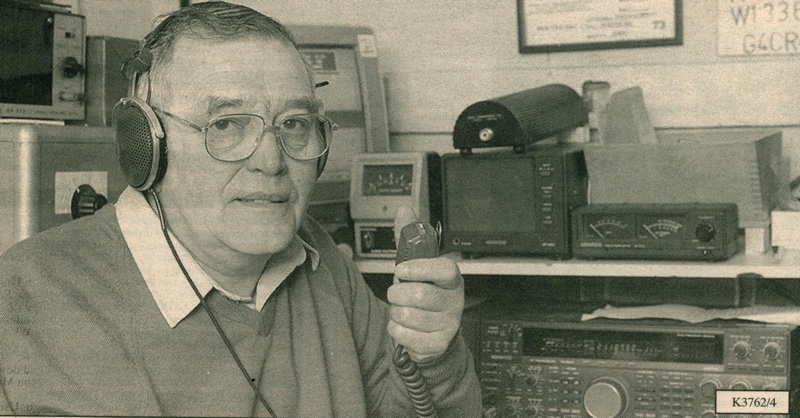
Lewis Kirby twiddles with the dial on his radio receiver and listens intently to the two voices emerging from the static.
Both sound like Donald Duck, until he fine tunes the reception and the conversation clarifies.
You could be tuning in on a two handed radio play… until you realise you are eavesdropping on a real conversation on a signal that has travelled half way round the world to Lewis’ garden shed, from a Radio Ham in darkest Peru.
Lewis a 59-year-old former British Telecom engineer is the chairman of the South Derbyshire and Ashby Woulds Amateur Radio Group, a group he helped found some five years ago.
The title is a weighty one. But then Radio Hams ten to take their hobby seriously tied fast by international rules and regulations that demands amateur operators pass an exam before they are licensed to take to the airwaves.
It’s more than one hundred years since the Italian Guglielmo Marconi put together the discoveries of others to create the radio. But even through Lewis will tell you how it works, it still seems like magic.
By 1901 Marconi had transmitted the letter S in morse code (a skill still needs by radio hams who want to pass the higher exams needed to extend their scope) at the speed of light across the Atlantic from Cornwall to Newfoundland.
More sophisticated systems, able to transmit voices and music and eventually pictures followed. Today many amateurs use complex state of the art equipment to chat to other Hams around the world.
Though it’s still possible to correspond on a piece of equipment not very different than the box of valves and wires used bt the Army to communicate with its troops during the last World War.
Lewis operates his station, call sign G4CRT, from his garden shed.
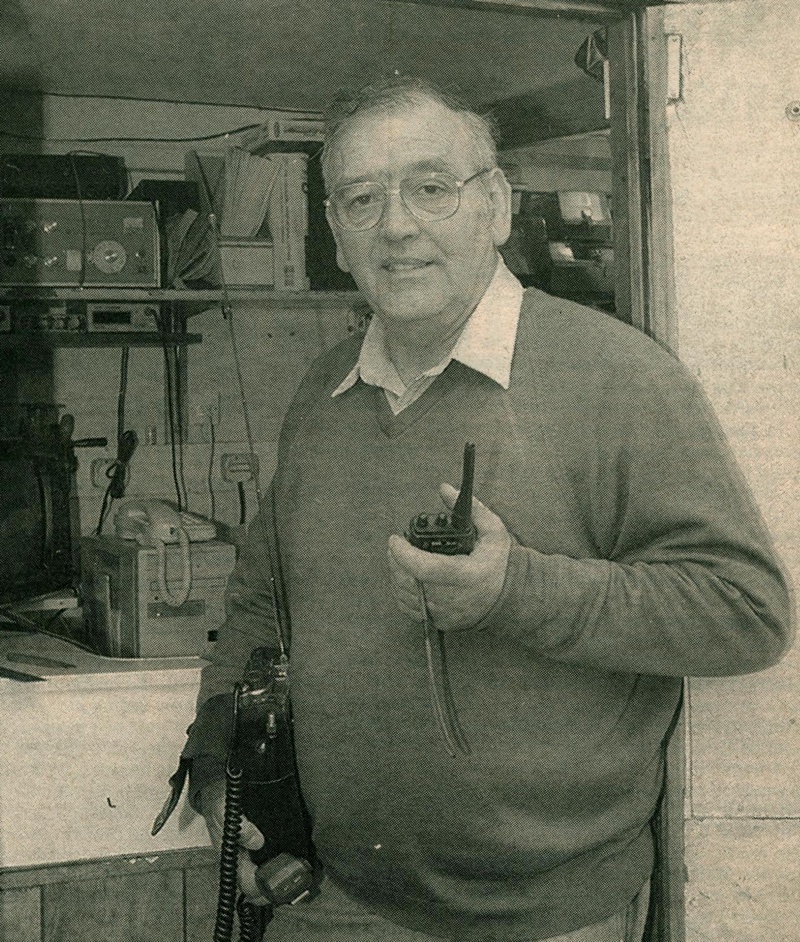
Aerials dominate his back yard, his VHF receiver collapsed on the roof during recent 86mph gales, a second towers well above the height of the house. All have to have planning permission. This is a hobby hedged about by red tape.
He became hooked 49 years ago at the age of ten when he used to call in to see a neighbour, a great amateur radio fan.
“I loved to her him talking to different people around the world,” he says. “It was the days before there was much television and it was a bit of a different hobby.”
He had always been interested in the radio, saving up his old 10d a week pocket money to buy the 1s6d valves need in those pre-transistor days to make his own working model.
Eventually he brought his first transmitter/receiver from army surplus. There were quite a few around in the early 1950’s. Some were OK - others -“Well you wondered how we ever won the war with equipment like that.” he says.
It’s an interesting hoppy especially for insomniacs. You can come on air any hour of the day, and somewhere around the world someone will be awake, and waiting to talk to you.
It’s a mater of serendipity whom you reach, especially in the early stages. It could be a bookmaker in Hong Kong, an engineer in Australia, or a factory worker in France.
Many people make life long friends across the air waves, keeping in constant touch. Others you may talk to only once, and move on.
It is interesting to talk to other people about their many and varied lives. It’s a sort of world wide chat line - with limitations. A wireless operators licence bands them from talking about politics and religion. It also stops them from broadcasting music.
But it is more than just a way of passing the time. Amateur radio enthusiast come into their own when disasters strikes, getting up to the minute news out of their countries, at a time when normal communications may have broken down.
A similar system, RAYNET of which Lewis is a member runs in Staffordshire ready to step in and work with mergence services if telephone systems collapse. Club secretary Berys Walley grew up with a Radio Ham - her dad. She decided to join him when she grew fed up of listening to him talking to contacts around the world. But she still had to take an exam before she could pick up the mic.
“I started off with Citizens Band radio, though my father had an amateur licence. I could listen to him talking, but I couldn’t join in.”
Later she was persuaded to take her first level licence by Leiwis, who trains amateurs for the exam, though she still has to learn Morse code needs to go up to the higher frequencies, witch will give her wider scope.
Learning the classic dot dash signals so familiar from a flurry of war time films, comes easily for some. “It’s supposed to be better if you are musical as I am,” says Berys. “But I find it difficult to learn.”
Lewis smiles. Morse obviously didn’t present him with any problems, and he sill sometimes uses the key seated next to the microphone on his desk. For Berys it’s a family thing. After picking up her license, her mother and eldest daughter to their exams.
She takes her portable system with her when she goes abroad, once talking to a fellow mobile home traveller over the airwaves, until hey met in a car park in rural France where they chatted for an hour, before going on their way.
Another time, she says proudly, she managed to contact a missionary in Papua New Guinea, during a special event with other Hams.
Most people using the radio speak English, though there is a series of Q codes for those who don’t. Many send cards, which Lewis collects, when they have been in contact often containing a photograph, along with their call sign.
It doesn’t need to be an expensive hobby, they say. You can get basic equipment, good enough to get you started for around £100, or buy more sophisticated sets second hand.
And there’s another advantage too, which comes on those rare occasions when the television starts to fizz and the voice-over warns viewers not to adjust their sets.
When that happens says Berys. “I’m off like a flash, because freak atmospheric conditions help us to get in touch with people far beyond our usual reach. With my HF equipment I can listen to the work. It’s lovely to be able to talk to so many different people.”
And they are anxious to chat too. There are not may women in the radio Hams world.
This is a place where it’s the men who like to gossip, tucked away in their rooms and garden sheds.
You can find out more about South Derbyshire and Ashby Woulds Amateur Radio Club during a two day event they are running new Saturday and Sunday at the Rosliston Forestry Centre to celebrate National Science Week.
The event, staged to show the everyday use of science technology and engineering, will involve the Fire Brigade, Territorial Army, Scouts, Air Training Corps, Cubs and Phoenix Hospital Radio who will be there to show the full use of radio in the community.
The club will be operation an amateur radio station using a special call sign where visors will be able to pass messages on to other radio stations across Britain and the world.
Story originally published in the Burton Mail, "Weekender" 18th March 2000.